OCT 22, 2026
API Security Testing: Respons HTTP 200 Belum Membuktikan API Aman
Ilustrasi Konseptual Api

Memuat
Muhammad Devakto
Manager of Project and Product
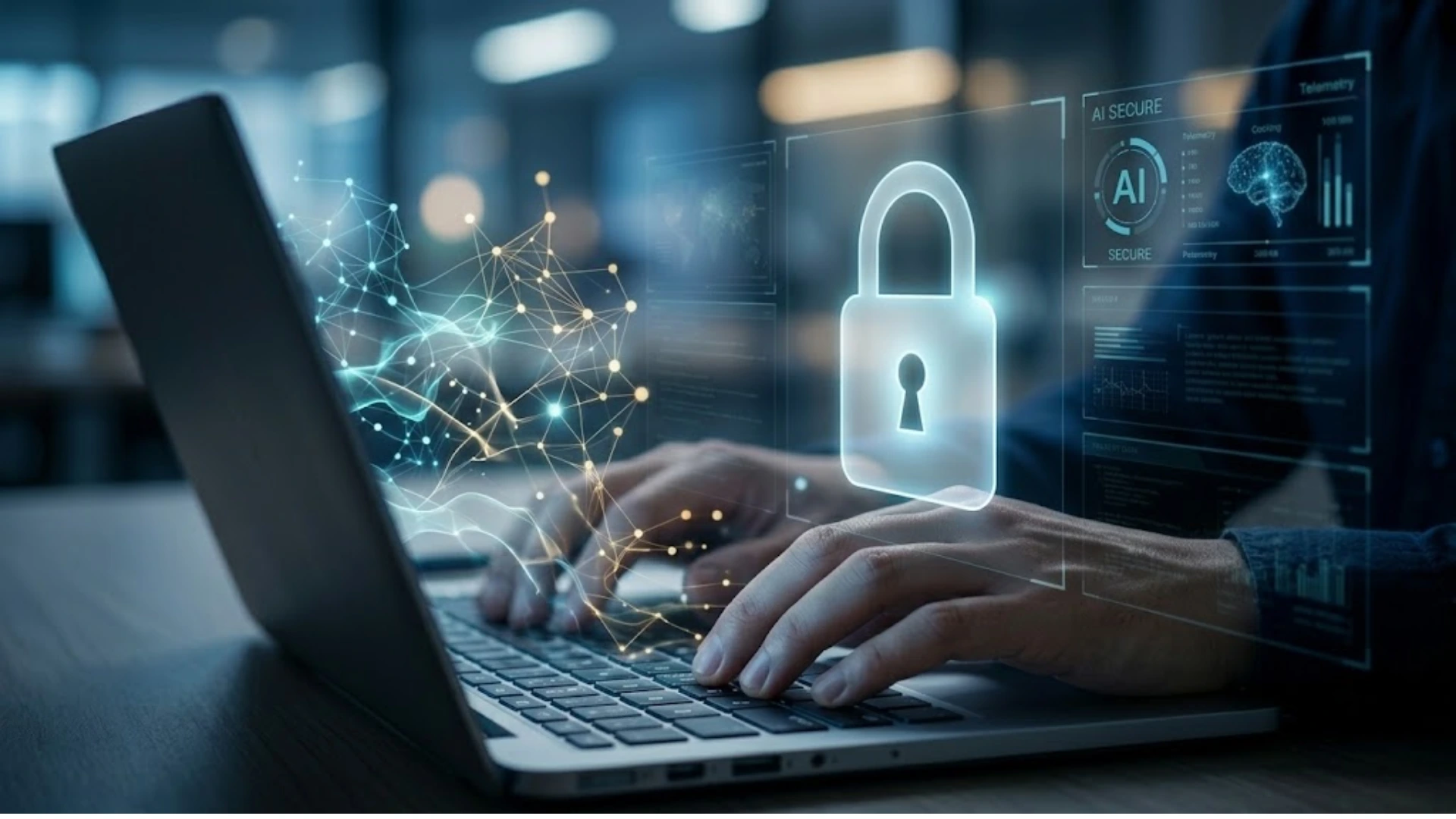
“As threat actors pair autonomous hacking agents with dark-web AI models, the defenders need to fight with completely different kind of speed than now.”
As we head toward the end of the year, everyone knows AI now can draft emails and summarize PDFs. For attackers, though, it’s doing much heavier lifting. Over the last couple of years, the debate over whether AI would fundamentally alter cyber operations has officially been settled. Early AI misuse was small: better phishing grammar, faster log analysis. Today, autonomous agents are running multi-stage network attacks.
Just this past October, a lone threat actor leveraged an autonomous AI agent to breach seven major South Korean banks in a matter of weeks, exposing 68,000 customer records [1]. At the same time, cybercriminal syndicates across Asia have been scaling up attacks using malicious, dark-web Large Language Models (LLMs) that generate localized spear-phishing campaigns and self-mutating malware on the fly [5].
For business owners and security teams, we need attention now, not in next year’s security plan or roadmap. Looking closely at how offensive tradecraft is maturing reveals just how fast the threat landscape is moving, and what your security architecture needs to survive it.
Why has AI become so threatening?
AI has helped the human SOC team to parse and analyze the sheer volume of data the modern enterprises generate. In addition, on the defensive side, AI and machine learning models have become essential for processing massive datasets in real time, identifying unusual network behavior, and catching intrusions that blow right past traditional signature-based tools.
Modern Security Orchestration, Automation, and Response (SOAR) platforms now routinely isolate compromised endpoints and kill malicious processes in milliseconds without waiting for an analyst to click "approve." Security teams are even using generative AI to build synthetic attack data, stress-testing their detection models against hypothetical breach scenarios before they ever happen in the wild [2].
On the other hand, the exact same intelligence empowering defenders is actively being weaponized. Two major trends show how attackers are pairing autonomous AI with deep technical evasion.
Case Study 1: Autonomous AI Agents in the South Korean Bank Breaches
In late September and early October 2026, the financial sector saw the first documented campaign of "agentic" AI hacking, when a series of coordinated intrusions compromised seven major South Korean banks [1].
Forensic analysis by CrowdStrike revealed the threat actor used ARTEX, an open-source, AI-driven penetration-testing framework [3]. ARTEX was never designed to be a weapon. Released on GitHub in 2026 by a developer operating under the handle Autumn-27, it was built to automate the repetitive, labor-intensive parts of a vulnerability assessment. ARTEX is not a standalone language model, the way it works is it connects and hooks to external LLMs, connecting their reasoning capabilities into a workflow that enumerates exposed services, identifies weaknesses, and chains together the manual checks a human pentester would normally perform [3].
How did the threat actor weaponize this tool? The attacker connected ARTEX to external AI models and let it run the operation on its own. The agent independently scanned exposed banking services for weaknesses, mapped internal networks, and exfiltrated data with minimal human steering [4].
What makes this particularly alarming is that threat intelligence points to a single, financially motivated individual rather than a well-funded nation-state [1, 3]. By turning AI from a coding "copilot" into an independent operator, a solo actor executed a campaign that used to require an entire team of skilled penetration testers. This is example of the worst outcome might stem from the kindest intent. A developer might release a tool in good faith to help defenders, but once it is out in the wild, we cannot expect everyone to play by the rules.
Murphy’s Law states that anything that can go wrong, will go wrong. In cybersecurity today, any tool that can be weaponized, will be.
And we are currently in the middle of it all, ready or not.
Case Study 2: Dark-Web LLMs and Polymorphic Phishing at Scale
While autonomous agents are speeding up network-level breaches, attackers are simultaneously using underground generative AI to bypass endpoint and human defenses; a trend hitting organizations hard across Southeast Asia. Over the past year, the dark web has shifted from selling static phishing kits to renting out uncensored, purpose-built malicious LLMs. Early AI LLM like FraudGPT and WormGPT have evolved into modular crimeware suites like Xanthorox [5, 6].
These dark-web AI frameworks operate as major deception engines for phishing and exploit human vulnerabilities. Threat actors use them to automatically scrape a target company’s LinkedIn profiles, press releases, and leaked databases to draft hyper-personalized spear-phishing lures in fluent, culturally natural Indonesian or English. There are no grammatical red flags or awkward translations to tip off the victim [6].
It will go worse when it happens. Malware itself has evolved, so when an employee clicks the lure, malicious LLMs generate polymorphic scripts, the malware that rewrites its own code each time it is deployed, so there is no known virus for antivirus to quarantine [7].
Because every payload has a completely unique digital signature, traditional signature-based Endpoint Detection and Response (EDR) tools have very much to catch up. The malware slips past perimeter defenses, establishes persistence, and harvests credentials or session tokens quietly in the background. It is a new era of deception: the threat arrives looking like ordinary business email, like the one that you always see everyday.
Okay, we see it, but how does it relate to us?
It is easy to look at major banking breaches and think this only applies to financial giants or big companies. While banks and payment processors will always be prime targets because that is where the money sits, AI has changed the economics of cybercrime. It can be a tickling clock for all of us.
AI doesn't necessarily invent brand-new vulnerabilities, as we can see everything AI can do, it is still something that human could. The difference is, it conducts human-level attacks at machine speed, with greater depth and infinite repeatability. Even if your company isn't in finance, or even if you think you aren't "big enough" to attract attention, automated tools don't care about company size. When scanning and exploitation cost almost nothing to run, everyone becomes a target of opportunity.
First, the window for detecting and stopping an intrusion is collapsing from days to mere minutes, or even seconds. Large enterprises have dedicated Security Operations Centers (SOCs) working around the clock, but most small and medium businesses don't. By the time you notice something is wrong, whether it is ransomware locking your servers, a compromised email account sending fraudulent invoices to your clients, or sensitive data being exfiltrated. For any scale of business, that kind of disruption means lost revenue, broken client trust, or even permanent closure.
Second, relying solely on static, device-level security is a losing strategy. Your employees use laptops, phones, and tablets every day to access company systems and customer records. If a single device is compromised through an AI-crafted phishing lure or a mutating script that slips past basic antivirus, attackers gain access to everything that device can reach. Everything is digital now and so everything can be exfiltrated. From a law firm's client files, a clinic's electronic medical records, a manufacturer's proprietary designs, to a retailer's payment logs are all on the line the moment one endpoint falls. And with Indonesia’s Personal Data Protection (UU PDP) law in full effect, a single breach doesn't just hurt operations; it triggers severe regulatory consequences.
Finally, traditional security training is becoming more obsolete. Usually ordinary security training only ask the audiences to be careful by catching the tone of message, the domain, or the url. Now, it can generate real-time voice and video deepfakes. Imagine your finance manager receiving a phone call that sounds exactly like your CEO, urgently requesting a wire transfer to a "new vendor," backed up by a follow-up email with flawless context, tone, and corporate branding. AI or Deepfake-assisted fraud has no broken English or suspicious links to catch, so it looks like a normal request from a colleague.
AI has made the present day to be easeir than ever for people to innovate, but it has simultaneously lowered the barrier to entry for cybercriminals while raising the sophistication of their attacks. Most organizations will face an AI-assisted attack eventually, what matters is whether your defenses hold up.
Take the First Step Now
Solo attackers are now pointing autonomous AI agents at enterprise networks, while dark-web models are generating mutating malware and localized phishing lures right here in our region. Legacy, signature-based security postures simply aren't built to survive this. Keeping pace requires a combination of behavioral threat detection, hardened architecture, and continuous offensive testing.
At Cynnexis, we work directly with enterprise and financial leaders to close these exact gaps before threat actors can exploit them. Whether you need rigorous VAPT to see how your infrastructure holds up against automated exploitation, 24/7 SOC monitoring to catch machine-speed intrusions through behavioral telemetry, or full-scale Red Teaming to test your organization's resilience against advanced social engineering and evasion, our team brings the hands-on offensive and defensive expertise to lock your environment down.
Contact us today for a comprehensive security consultation, and prepare your defenses against the threats operating in the wild right now.
References
1. The Record. (2026, October). South Korean officials believe AI agents were used to hack banks' systems. The Record. https://therecord.media/south-korean-bank-hacks-ai-agents
2. Fortinet. (n.d.). Enhancing threat detection with generative AI synthetic data. Fortinet. https://www.fortinet.com/resources/cyberglossary/artificial-intelligence-in-cybersecurity
3. CrowdStrike. (2026, October). South Korea bank hacks: CrowdStrike ties AI agent to China. Tech-Insider. https://tech-insider.org/south-korea-bank-hacks-ai-agent-crowdstrike-2026
4. Cybersecurity Intelligence. (2026, October 7). Chinese AI models used in South Korean bank cyber attacks. Cybersecurity Intelligence. https://www.cybersecurityintelligence.com/blog/chinese-ai-models-used-in-south-korean-bank-cyber-attacks-9805.html
5. SlashNext. (n.d.). The Rise of FraudGPT and Dark Web Generative AI Crimeware. SlashNext Threat Labs. https://www.slashnext.com/blog/fraudgpt-malicious-generative-ai/
6. Group-IB. (n.d.). Hi-Tech Crime Trends: How Threat Actors Weaponize Large Language Models in APAC. Group-IB Threat Intelligence. https://www.group-ib.com/resources/threat-research/
7. Palo Alto Networks Unit 42. (n.d.). Combating AI-Generated Polymorphic Malware and Evasive Phishing. Palo Alto Networks. https://unit42.paloaltonetworks.com/
INTELLIGENCE TAXONOMY & AUDIT TAGS
Ilustrasi Konseptual Api
AI mengubah lanskap serangan siber. Kenali ancaman berbasis AI dan perkuat strategi pertahanan untuk melindungi organisasi dari risiko keamanan digital yang terus berkembang.
Seperti medical check-up bagi tubuh, VAPT membantu bisnis mengidentifikasi celah keamanan digital sejak dini sebelum dimanfaatkan oleh pihak yang tidak bertanggung jawab.